Thursday, September 2, 2021

What Do You Need to Know About NFT and Making Money in the Digital-Art World


Art is a discipline which was always spoken about with a certain level of judgment and skepticism. Since the establishment of popularized artworks, people took forever to get on good terms with the idea that pieces of art are worth money and validation. With each step of the ladder of artistic evolution, many found styles, such as abstract, minimalism, impressionism, etc. very difficult to accept, as they did not understand how a work with such simple details could carry a deep and controversial meaning. Nowadays, the Western society is much more open-minded to the variety of different genres and supports artists who chose to follow “rebels of their time” by opening museums and galleries of modern art and promoting innovative take on this world’s social commentaries. And with such bursts of growth and development, it would be silly to assume that digital art will never take over the artistic stage and find a way to make profit in the 21st century. 


Remember how your grandparents used to trade their precious baseball cards among their friends, which ended up with an insane financial value? If they would be living in the wonders of online authenticity, they would not have to go an extra mile to achieve their marketing scheme.   Today’s reality displays that many internet users value digital art/content much more than before, which is why mediums like animation and 3D-modeling are being massively popularized. 


And while internet trolls question the integrity of the digital medium, thousands of people found a way to make millions of their influential pieces, without ever being given a hard copy of their work. So how do you end up being the next Mike Winkelmann and become a millionaire over one night? 


The way many professional and beginner artists could make a living out by presenting their art in a digital form goes through a NFT, which stands for non-fungible token. It is a form of crypto-currency that allows its owner to claim an ownership on the original piece of work that was bided at the online auction. As any work that is being displayed on the internet can be easily shared, copyrighted and reposted on different platforms, which loses its unique value, with NFT you become the one and only owner of your purchase. 


One of the lucky artists who was able to successfully sell his rights to the digitized file is Mike Winkelmann, also known as Beeple. In 2007, Beeple came up with the idea of a series called “Everydays,” in which he  was making daily artworks without skipping a single day, throughout 12 years. He was able to get recognized by big brands as Coca-Cola and Louis Vuitton, however with the strike of COVID-2019, Beeple’s business was suffering and he made a decision to start selling NFTs in November of 2020. With the starting bid of $100, he was able to sell it for $67 million dollars, making it the fourth most expensive artwork by a living artist. 


NFT is a great way to sell your artwork, as it does not require any connections and investments, but luck and determinacy. In theory any amateur artist that creates in a digital medium could become a millionaire overnight and get recognition. However, as NFT is still a new format of sales and many investors think twice before getting into it. Even Beeple himself, did mention that he believes that ‘we are currently in the bubble’ that is about to explode as internet transactions of any sort are unpredictable in the long run. As many artists think that the idea of buying ownership on something they did not make is slightly strange and could be morally considered as theft. Aside from that NFT sales are extremely bad for the environment, since all of the maneuvers require 40+ terawatts of energy which is an equivalent of a yearly consumption of energy in countries like Qatar or Hungary. And with the growth of environmental movements, NFT might look at charges and penalties for massively contributing to global warming. 


Despite its pros and cons, it's fair to admit that the Non-Fundable Token system is indeed very interesting and intriguing to observe. And for those who are nor afraid to take the risk it still is a great opportunity to try and put yourself on a digital market. 


And while the entire Art World is looking at such revolutionary changes, there are still millions of those who like to stick to the old-fashioned way of selling and showing their artworks. So while you question if you should try online sales, we would like to offer you the never-changing opportunity of presenting your creations in a classical and time-proofed way. We offer a variety of art supplies and best printing on canvas, metal and fabric technologies, as well as coatings, dry mounting and dye-sublimation services. As we support local and national artists, we would do the best job at providing you with exclusive materials and production, professionally performed by our business. 


Have a great and creative shopping!  


Click here to place an order 


Click here to go on a website 


Here’s some additional NFT content: 


https://www.youtube.com/watch?v=NNQLJcJEzv0


https://en.wikipedia.org/wiki/Non-fungible_token


https://www.theverge.com/22310188/nft-explainer-what-is-blockchain-crypto-art-faq 


https://www.creativebloq.com/features/what-are-nfts 


Tuesday, August 24, 2021

Guide: How to make a good photograph?


How often have you heard someone say “photography is easy, all you do is grab your phone and snap a quick picture!” Sure, with the rise of technology and easy access to cameras, it is indeed easy to “snap a quick picture.” However, would it be considered photography? When people go to the museums to observe works of great painters, they do not tend to compare their masterpieces with doodles they quickly sketched in their notebooks during a boring phone call. Was photography always taken for granted? And what is a true art of capturing a moment through the obscure vision of a lens? 


Back in the early 1800s, when photography was only getting recognized by others, people considered it a miracle. Through camera obscura, the pioneers of the craft were able to capture people and busy streets of small European towns. The photography industry spent decades innovating and expanding its potential. And just like any other art medium it came up with sets of rules which defined the value of a photograph and helped in  gaining respect and understanding of artists all around the world. 


Just like any art medium, it looks complicated and scary for many artists who are hesitant in trying something new. Luckily, our creative team has gathered a couple of tips that would help you understand the craft of picture taking and will lean you towards  improving your skills on this wonderful journey. 


Tip  1: Lighting 


The word “photography” comes from (phōtós), which means “light”, and (graphe), meaning “drawing”, meaning that picture taking crucially relies on the understanding of lighting. 


A proper lighting defines the mood, atmosphere and tone of the artwork, making the subject pop out of the frame and therefore creates a three-dimensional space, in which it becomes more interesting and attractive to the viewer. It also helps in making the quality of the final product higher and interactive. There are different variations of lighting setups, such as flat light (a main source that lights up the front of the subject), broad light (a side lighting),  slight lighting ( a way to separate a half of the subject by making one side of it darker and another lit up),  short light, rim lights and hundreds of other techniques that define the overall presentation of your final picture. 


As a beginner, there is no need to worry about getting expensive equipment. You can always try and play with natural lighting first. Best time for an outside photoshoot usually takes place around an hour before the sunset. This time period is called “Golden Hour” and it's an amazing opportunity for amateur artists to grab their cameras and observe the way the sunlight sets on their subject. As an inexpensive piece of equipment you can try and use “bounce boards.” It is essentially a large white cardboard that reflects and softens the light, making the overall appeal more sensual and subtle. 


Tip 2: The rule of thirds 


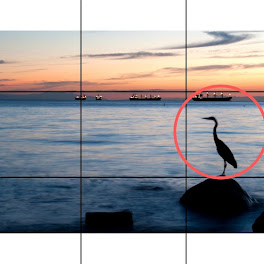
 Imagine a grid, dividing your photograph in 9 equal squares. Your goal is to position the subject in either left or ride third of an image. Avoid having your ‘model' pose right in front of the camera, as it cheapens the work and lacks navigation, meaning the viewer will be confused where to look at. However, placing an “attention grabber” on the side of the frame gives more room to fully grasp the idea of the image. You get to create a “pleasing” take on the final work and emphasize on the importance of the subject you capture. The rule of thirds is all about composing the subject in the most engaging way possible.


Tip 3: Tell a story 


Even the most fabulous, professionally made photo could be considered boring and anticlimactic. Make your audience feel something special! Prior to turning your camera on, think about what would your picture contribute or share with others? How is it different from what people already have seen? What is unique about it? Photography is a form of artistic  storytelling, therefore, if your work does not carry a message or meaning behind the lens, it would not be considered as “art”, but rather a technical execution of a meaningless task. 


Tip 5: Post-process 


Once your photoshoot comes to its end, it's time to use some “magic” in a post-production suit. Digital editing is not mandatory, but highly recommended! You do not need to buy expensive softwares, such as Photoshop, that tends to intimidate a lot of beginners. Nowadays, the majority of smartphones and laptops have an editing feature already in the device, that you do not need to download or search for. The simplest layout will be guaranteed to have what you need! Spend 5-10 minutes correcting your exposure, playing with colours and shades and with those final touch-ups your work will look much more professional and unique. 


Tip 6: Delivery


You have spent so much time and effort making a good photograph. Don’t let it collect dust or hide in the shadow of unopened emails and files on your computer. Take the next step and present your work to others! As a beginner photographer it is amazingly rewarding to see your first work in a professional appearance. We offer prints on high-quality canvases and other materials, used by many talented individuals in their art spaces, such as exhibits or art galleries. With our guarantee to provide an outstanding service in printing your work and your dedication to a new craft, you will be able to develop as a professional, and maybe one day evolve your hobby into a real life-long creative career! 


And there you have it! After going through the cycle of photography, from brainstorming the idea to a delivery stage, you will never take this artistic field for granted and will be able to train your mind to see the beauty, hidden from others. 


Here is a link to our website, where you can find additional information regarding professional and affordable prints! 


Click here to place an order. 


If you found this article interesting, you may also enjoy reading additional information and exciting insights on our website! 


Click here to explore more photography related articles. 


Tuesday, August 3, 2021

Oil-Painting on Canvas for Beginners


Despite its free spirit and liberty, making art could be a very stressful activity that takes practice and skills. This is why many beginners are often afraid to admit that they are ready to take a leap of fate and upgrade their capability, by using professional supplies. However, just like every other challenge, it will only be scary unless you try to overcome your fear. We would like to show you that there is no need to panic when it comes to art. We have prepared some tips for those of you who wish to explore more about working with proficient art supplies in a medium called “oil-painting on canvas.” 


#1 Overcome your fear.

Failure does not exist when it comes to art! Even if you tend to compare yourself with great painters such as Pablo Picasso or Vincent Van Gogh, you will find that their works were judged and critiqued, yet despite that they kept on doing what they love. Art is about passion, not fear!  However, If you are afraid to use professional art supplies , such as canvas, right away due to lack of experience,  a great alternative could be a material called canvas boards which is a cheaper tool, used by many artists to do fast and brief sketches on. 


Once you have manifested your artistic capability and put your worries and anxiety aside, time to get creative! 


#2 Know the style that you are going for 

Sure, improvisation is great, however, if you do not have much experience and want your first canvas painting to look good, it is safe to say that planning ahead will save you a lot of trouble.  Explore more about a specific style you wish to create in and research different techniques used in that field. It is also a good idea to find inspiration in works of those who executed their masterpieces on a professional level. For example, if you are interested in impressionism and would like to become the next Claude Monet, learn what tactics he used for his projects and mix them with your own vision.


#3  Learn your medium 

Once you have chosen your style, time to make sure you know what to do with the medium you work with. If we are talking about oil painting in particular, educate yourself on its safe usage.  Take your time and learn different techniques in application, color mixing and the symbiosis of canvas and oil (how it lays on a surface; what makes it stand out, etc.)


With the help of gesso, which is a material used for priming a canvas at the beginning of the process that helps the paint last longer and prevents oil paint from sinking into the canvas. It is an essential part of the process which will make your piece look professional and well developed. Always acknowledge that oil paint can get messy and it is your responsibility to prevent any spills around your work space with cardboard or tapestry that may be placed on the floor, walls and furniture around you.  You also need to remember the importance of storing your materials. DO NOT LEAVE YOUR BRUSHES and PALETTES covered in paint after you finish. Get in a habit of always cleaning your supplies with detergent or warm water once you’ve done painting. Oil paint is an expensive luxury, and you do not want to waste your money on making a mistake. 


#4 Avoid leaving blank background (only if that was not implied by your vision)

Best way to start your painting is to eliminate any blank space and fill the background of your work with the color that will benefit its emotional value. Only in rare cases, leaving white space is a good call, however as a beginner who tries to master the craft of oil painting on a canvas we highly recommend you to get rid of bits of the canvas that will visually confuse your potential audience or buyers. Aside from that oil paint has a tendency to create cracks overtime, and the best way to prevent it is an over layering technique. By placing coats of paint on each other, your final work will less likely be damaged and dried up in crevices, which will be hard to accomplish if there is an untouched part of the canvas you are working on. 


#5 Get quality art supplies! 

Lastly, it is important to work with comfortable and professional art supplies. The word professional should not scare you, as it does not always mean expensive. We provide a lot of affordable art supplies that will ensure your easy and laid back start in becoming a maestro of the craft! 


We offer:

 And many other art supplies that will make your artistic journey affordable and satisfying.


And now you are ready to paint! 


We hope our tips helped you gain confidence and inspired you to finally get out of your comfort zone and try yourself in a new art medium.  Our store is here to support your new beginning with our art supplies and materials that will ensure your security and comfort on the way to success! 


Click here to purchase our art supplies. 


Click here for more information on our website 


Friday, July 16, 2021

Photomosaic: How did it all start?

 Photomosaic: How did it all start? 


Art never stops progressing. It is a craft that develops itself throughout time, yet still honors its roots. People evolved and their understanding of beauty and storytelling evolved with them. From craving minimalistic figures in caves in order to to capture  a certain message centuries later, new generations were coming up with modernized forms of art with a similar concept, such as painting, filmmaking, photography, etc.  And just like that, many artistic techniques evolved as the world around us was shape-shifting. One of the most ancient art techniques which was used by different cultures and religious subgroups was mosaic. It is a form of art including assembling pictures by placing hundreds of small colorful pieces of either stone, glass or ceramic together. With a simple understanding of shading, and color theory, artists were able to delight thousands of audiences with their masterpieces. Yet, time passed and with the rise of digital media, mosaic also found itself in a new modernized form called Photomosaic


The pioneer of photographic mosaic was Robert Silvers, a 27 years old MIT graduate who developed an algorithm that was able to organize digital photo files into one utter image, back in 1995. From that point on, many artists got out of their comfort zone of standard art mediums and expanded their horizons into a digital realm of the craft. 


Assembling many small pieces into one final product is a very interesting and creative process, which requires skills and dedication. Gladly, our designers will help you out with the procedure. All that is required from a client who would want a professionally made photo mosaic is a set of pictures (no more than 200 files) and a description of what they would like to get in the end. 


By using finest software, such as AndreaMosaic, and Photoshop, our expertise and your creative vision, the results would be worth waiting for! 


There is no wrong way to collaborate your idea into a piece of art, so do not be afraid to experiment! Many of our customers love ordering photomosaic made by hundreds of family pictures that are constructed into a portrait of  their loved ones, or a mosaic of their wedding day, made by endless pieces that resonate with their most romantic memories together. The possibilities are countless! 


If you are interested in purchasing a professionally made photomosaic, printed on the material of your choice (metal, fabric, wood, canvas, etc.), submit your files today and let us take care of the rest. 


Click here to check out our website for more information. 


Happy shopping! 


Click here to place an order. 


Thursday, July 8, 2021

Printing on Mugs: History of Dye-Sublimation & Its Perks

 Printing on Mugs: History of Dye-Sublimation & Its Perks


Did you know that the history of painted art on ceramics goes all the way back to ancient times? In many Asian and Middle Eastern cultures, painted or decorated pottery and ceramic dishes were considered as a sign of higher class. From simple geometrical figures to professionally made caricatures, any tableware was able to transform into a piece of art and tell a story for future generations. 


Later in the 1950s, French entrepreneur Noël de Plasse invented a technique called dye-sublimation that was able to take a craft of capturing history on dishes to the next level. Dye-sublimation became a revolutionary discovery that helped to commercialize printing on mugs and plates in the new era of technology and consumerism. Nowadays, many have forgotten what deep meaning the illustrated dishes carry within themselves and shifted their purpose into a form of a modernized souvenir. Despite centuries of meaningful history, printing on pottery became industrialized and promoted as a very popular gift idea that you can also purchase on our website!


However, prior to your order, why don’t we tell you a little bit more about the magical process of dye-sublimation and its benefits! 


First of all, it is fair to mention that there is a whole variety of different printing methods! These include pad printing (which is very popular for printing logos on golf balls), litho printing, and digital printing to name a few. 


However our production only focuses on dye-sublimation as it is considered the best printing method above all. Why, you ask? Dye-sublimation is the only printing method that uses organic dyes which support the quality of the image, as well as helps in sustaining vibrant colors throughout and ensures that the design will last longer. It creates a glossy effect on the material and the process of heat transfer reduces chances of any potential damage to the ceramic. 


Aside from the great appearance of the final product, dye-sublimation provides several practical benefits:


  • The print on your mug will be permanent and durable, meaning you will not have to worry about your image design dissolving over time. 

  • It is also dishwasher and microwave safe, as a layer of protection will secure the print from water or heat damage. 

  • Dye-sublimation prints are scratch resistant so you won’t have to worry about bringing your mug anywhere (such as in your bag or purse.) 


Many of our customers love purchasing mugs with fun and wholesome photographs as it is a unique idea for a thoughtful present to your loved ones. It is also the perfect accessory for your office or any business related products. 


Happy and creative shopping to you!


Click here to place your order today. 


Friday, June 25, 2021

How to pick a perfect frame for your painting or photograph?

Art is a discipline that takes time and skill, and nothing should get in the way of your artistic process. From coming up with an idea, to framing a final piece and putting it on the wall. Framing a final product is like decorating a cake with delicious frosting - it is not necessary, yet makes it more desirable and fun!  


Do all artworks need to be framed? No. You first need to make sure that framing benefits your work and does not take away its magic. Make sure your work has “room to breathe” and does not hide its full potential behind the frame. It is also important to consider what medium you are working in as some of them, such as prints, do not always need to be framed. 


If you decided that framing is for you, here is our take on that. 


Why do we think you should frame your piece? The main reasons that make framing valuable are protection and aesthetic. If you chose to create on fragile material, such as paper, a simple frame could save you a lot of trouble as your work will be safe from any potential damage. And of course, framing plays a huge role for the overall tone of the work, as well as makes it look professional. 


Now, do not order your frame just yet, as there are a couple of things to consider prior to your acquisition. First of all, the material of the frame is crucial and can drastically change the atmosphere of your work. If you are looking for a classy and old-fashioned framing, we highly recommend wooden frames. Wood texture presents a piece through a more professional and expensive style. It is favoured for oil paintings and photographs, as it creates a warm and cozy ambience that can highlight the brightness of the final product. 


Yet, if you want to go for a modern and risky look, metal frames are your perfect match! Many abstract artists use metal frames to add more "pozaz" and edge to their work. It is more unusual to see a metal frame over a wooden one which makes it more unique and innovative. The sharp texture and silver lining of the frame will not take away from the work, but will present it through a more subtle and creative lense.

Another important and tricky step of choosing a frame is the colour. Examine the overall mood of the work and try to find a colour that best “describes” your art piece. The tone of the work is what you need to keep in mind, in order to choose the colour of the frame that will compliment it best. Do not choose a colour of the frame that will camouflage with your work. A safe and easy solution would be to go for classic brown or grey shades so as to not interrupt the overall “feel of the work.” Keep in mind that each shade has its own subtext: light shades are for casual statements whereas dark shades are for bold statements. 

However, do not be afraid to experiment! Art never stops changing and innovating, so sticking to the “good old-fashion way” might not be something you desire to do. Just like choosing between classic wooden and alternative metal frames, you can find a bright and bold colorful frame that will make your work stand out. Nevertheless, it is essential to remember that colours must be following principle rules of design. The best way to know if the colour you are looking for will bring your work to the next level is by referencing the colour wheel. If you are looking for a complimentary colour scheme, you would choose colours that are opposite each other on the colour wheel. For example, if your overall painting is red, your best match would be a green frame. Another option is the monochromatic colour scheme, where you choose one colour and its many shades. For example, if your overall painting is dark blue, then your frame could be a much lighter shade of that same blue. 


Lastly, the placement of your final product can dictate the kind of frame you should purchase. As a matter of fact, it is more important to examine your work's “future home” (the size of the room, its design, and colour palette.) After all, the main goal of your work is to decorate the environment it is in and make it visually pleasing at the end. 

And now you are ready for your purchase! 

We offer plenty of high quality frames of all kinds that are beloved by many professional artists, amateur photographers, and designers. 

Happy and creative shopping to you! 

For more information check out our website and submit your order today!  


Monday, October 26, 2020

Home Office Decor

If you're working from home right now, then you know how challenging it can be especially with plenty of distractions preventing you from getting any work done. Dedicating a space to do focused work can help eliminate some of these issues. With any home office having the right balance of functionality, design and decor as well as personal touches creates an inviting space that also inspires you to get some work done. Here are some tips on how you can add personalized decor to your home office.


Acrylic blocks are a great way to add flair to your work space. These beautiful table top displays are small and make a big impact. They're great to give as gifts or you can add them to any other room in your home. Acrylic blocks are free-standing, face mounted on 1" thick acrylic using optically clear double-sided adhesive. The rear of prints are protected with 1mm thick backing. You can easily customize them with photos of your loved ones or your favorite artwork. They're a sure way to help brighten up your day.


If you're like most people, you definitely have some art or photos tucked away in storage. An easy way to add more art to your home office is to put those photos in frames for some instant wall decor. We carry a wide selection of materials and colors so you can customize your frame to your liking. Check out our selection by clicking here.


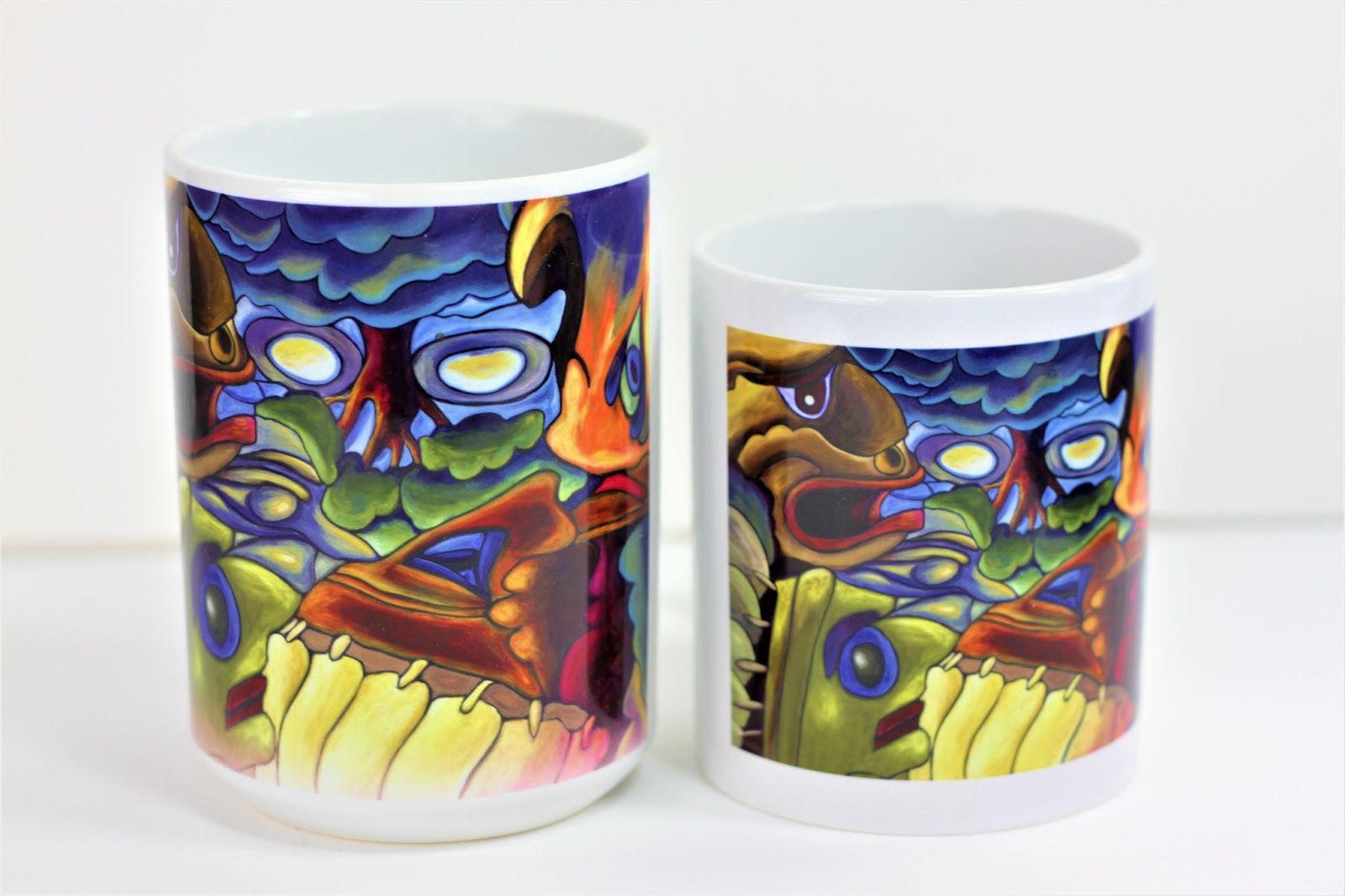
If you like starting your day with a warm cup of coffee, why not have a mug that is truly unique with your own design? With our printed mugs you can customize them with a photo of your loved ones or add some of your favorite artwork. Our mugs are available in two sizes and are perfect for all your warm beverages! They also make a great gift for friends and family, or use them to help promote your business.